
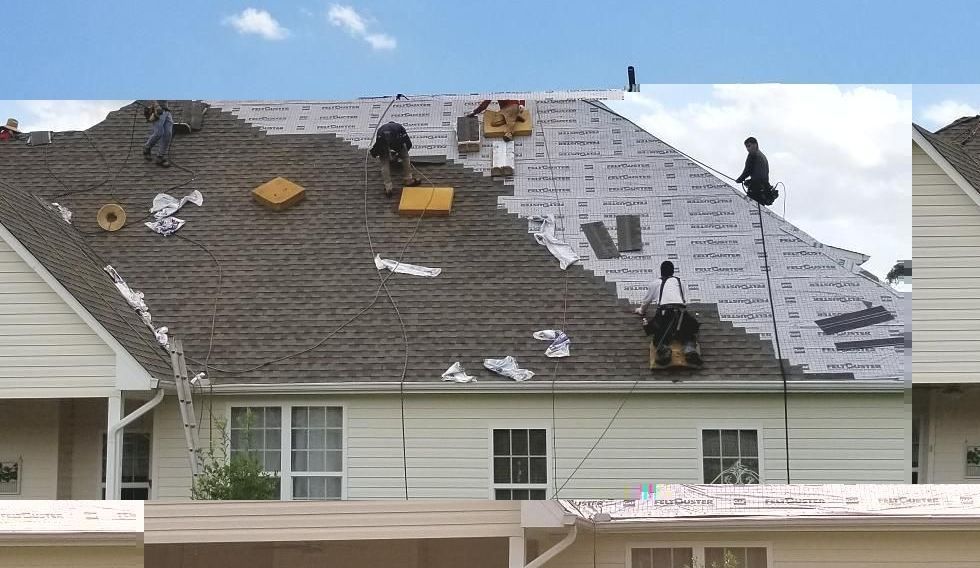
Yes. A roof leak can often be fixed without replacing the whole roof when the opening is limited and the surrounding shingles, flashing, and roof deck are sound. A stain on your ceiling does not tell you how much of the roof needs work: water can travel before it becomes visible indoors. Find the entry point and inspect the area around it before deciding on a repair or replacement.
- A roof leak can be fixed without replacing the whole roof when damage is confined to a repairable area.
- A ceiling stain can sit away from the opening; trace the water path before choosing a repair.
- Widespread wear, repeated leaks, or damaged decking make a broader replacement worth assessing.
- Campbell's Precision Roofing inspects the roof and recommends a limited repair when it is enough.
Why a small leak deserves a careful inspection
A leak is a symptom, not a diagnosis. Missing shingles, a failed seal around a roof penetration, damaged flashing, and storm-lifted edges can all let water in. The first visible drip might appear far from the defect. Covering a ceiling stain or sealing the nearest visible shingle does not establish where the water entered.
In its June 2026 guide to leaking roofs, GAF distinguishes minor shingle repairs from cases involving major storm damage or long-term moisture that may require replacement. The practical question for your house is whether the problem is local and the rest of the roof can still perform. Campbell's Precision Roofing offers roof repair and replacement after an inspection rather than treating every leak as a new-roof sale.
If water is entering a light fixture or you see sagging drywall, keep clear of the affected area and get the electrical or structural hazard assessed. Do not climb onto a wet or storm-damaged roof to search for the opening yourself.
Can a roof leak be fixed without replacing the whole roof?
Yes, if a roofer can identify and repair the entry point and the nearby roofing materials remain serviceable. A repair might address a small group of damaged shingles, a flashing detail, or another limited opening. The scope should include the surrounding area, not just the spot where the water finally appeared inside.
| What the inspection finds | Likely decision | What to confirm |
|---|---|---|
| One localized opening with sound surrounding materials | Assess a limited repair | The actual entry point and how the detail will be restored |
| Several openings or repeated leaks in different areas | Compare repair with replacement | Whether repairs are treating separate failures or a wider worn roof |
| Wet or deteriorated decking beneath the leak | Inspect the affected layers before pricing | How much material needs to be opened and replaced |
| Broad shingle wear or widespread storm damage | Assess a larger repair or full replacement | The condition of the entire roof, not one photograph |
These are inspection decisions, not promises that a particular roof qualifies for a small repair. A clear estimate should identify the cause found, the material being changed, and any work that can only be confirmed once damaged layers are exposed.
When a targeted repair makes sense
A repair is the reasonable first option when the roofer can point to a specific, accessible defect and show that the adjacent roof is in good shape. That could be a limited area of wind-damaged shingles or a failed flashing detail. The repair has to restore the water-shedding system, not simply hide evidence of water indoors.
Ask what will be removed, what will be checked underneath, and how the new material will connect to the existing roof. If the surrounding shingles are brittle or cannot be worked without causing further damage, a small-looking leak can become a larger project. That finding should be explained before the scope expands.
A single interior stain is not proof that you need a new roof. It is also not proof that one patch is enough. In 2026, the decision still rests on the inspected condition of the materials, the cause of the leak, and whether a repair can be completed reliably.
What if the leak appears around a chimney, pipe, or skylight?
The opening may be at the joint between the roof and that feature, not in the shingle field. Flashing and seals need inspection in context. Ask the roofer to show the water path and the proposed repair detail; do not assume that replacing a skylight or changing all the shingles is necessary from a stain alone.
What if only one shingle looks damaged?
Visible damage can help locate a problem, but the water entry may be uphill from the stain or hidden by overlapping materials. Have the area inspected for adjacent lifted shingles, fastener issues, and moisture below the surface. A photograph of one shingle is useful evidence, not a complete diagnosis.
When replacement deserves a serious look
Compare a full replacement with repeated repairs when the roof is failing in more than one place. Multiple leaks after separate repairs, widespread shingle deterioration, or large areas of damaged underlying material change the economics and the reliability of another patch. A contractor should show those conditions and explain why the smaller option would not solve the underlying problem.
Storm damage requires the same discipline. One damaged area does not establish that the whole roof must be replaced; equally, a leak in one room does not prove the storm affected only that section. Document the damage, inspect the broader roof, and make the repair-versus-replace call from what is actually found. Ask for photos and a written scope, so you have a clear record of what was found and what the recommended work includes.
If you are considering a new roof, review the material and scope rather than comparing only the headline price. Campbell's Precision Roofing primarily installs GAF roofing systems and explains the shingle, underlayment, ventilation, and flashing choices in the written plan. Its GAF Master Elite credential and President's Club recognition are credentials, not a substitute for inspecting your specific roof. Enhanced warranty options, including Golden Pledge, apply only to qualifying installations.
What to do before the roofer arrives
You can document a leak safely from inside and from the ground. This helps you explain the pattern without claiming to know the cause.
- Photograph the stain, drip, or affected material. Note when you first noticed it and whether it changes during rain.
- Move belongings away from the wet area if you can do so safely. Avoid touching electrical fixtures or sagging ceilings.
- From the ground, look for obvious missing shingles, fallen branches, or displaced gutter sections. Do not get onto the roof.
- Keep any earlier repair paperwork and dated photos. They help the contractor compare what changed.
- Ask for an inspection that checks both the suspected entry point and the surrounding roof condition.
GAF's June 2026 leak guide notes that water damage can extend to insulation and decking, and that the visible indoor sign can be away from the entry point. That is why the scope should distinguish exterior roof work from any interior or structural work that needs separate assessment.
What to ask for in a repair estimate
An estimate should make the choice between a patch and a larger job understandable. Do not accept a vague promise to stop the leak without a description of the work.
- Cause found: Where the roofer believes water enters, and what evidence supports that conclusion.
- Repair area: Which shingles, flashing, underlayment, or other materials will be changed.
- Hidden damage: How the contractor will handle wet or deteriorated decking discovered after opening the area.
- Alternative scope: Why a wider repair or replacement would be recommended if the first option is not sound.
- Follow-through: How the area will be checked and how the property will be left after work.
A price cannot be stated responsibly from a ceiling photograph. The size and accessibility of the repair, the materials involved, and the condition under the roofing all affect the final scope. Ask for a written estimate tied to what the inspection found, with a separate explanation if hidden damage changes the job.
For homeowners in Lincoln, Gaston, Mecklenburg, Catawba, Iredell, and Cleveland counties, Campbell's Precision Roofing offers an inspection and clear estimate. Its NC license is #101889 and GAF contractor ID is 1114013. Those specifics make it easier to check who is inspecting the roof and who will stand behind the proposed work.
FAQ
Can a roof leak be fixed without replacing the whole roof?
Yes, a localized leak can often be repaired if the entry point is identified and surrounding roofing and decking are sound. An inspection determines whether the damage is truly limited.
Does a water stain on the ceiling mean I need a new roof?
No. A ceiling stain shows that moisture reached the interior, not how much roofing is damaged. Water can travel before it becomes visible, so the source and surrounding materials need inspection.
Can a roofer just seal the spot where water drips?
Not reliably without finding where water enters the roof. The interior drip can be away from the exterior opening, and sealing the wrong spot leaves the problem in place.
When is roof replacement more sensible than another repair?
Replacement deserves consideration when leaks recur in several places, wear is widespread, or underlying materials are broadly damaged. A contractor should document those findings and explain why a limited repair is insufficient.
What should I document when I notice a leak?
Take dated photos of the stain, any drips, and the affected ceiling or attic area if you can reach it safely, and note when you first saw water and whether it changes during rain. Share them with your roofer so the inspection can trace the water path. Questions about your policy go to your insurance company.
Should I climb onto my roof to find a leak?
No. Inspect safely from inside or from the ground and leave roof access to a qualified contractor, especially after rain or storm damage.
One last thing
The cheapest-looking repair is not always the smallest complete repair. In 2026, ask for the water entry point, the adjacent material condition, and the written scope before choosing between a patch and a new roof. To discuss your roof, use Campbell's Precision Roofing's contact form to request an inspection or estimate.
Related guides
Campbell's Precision Roofing · Denver, NC 28037 · (704) 280-5996