
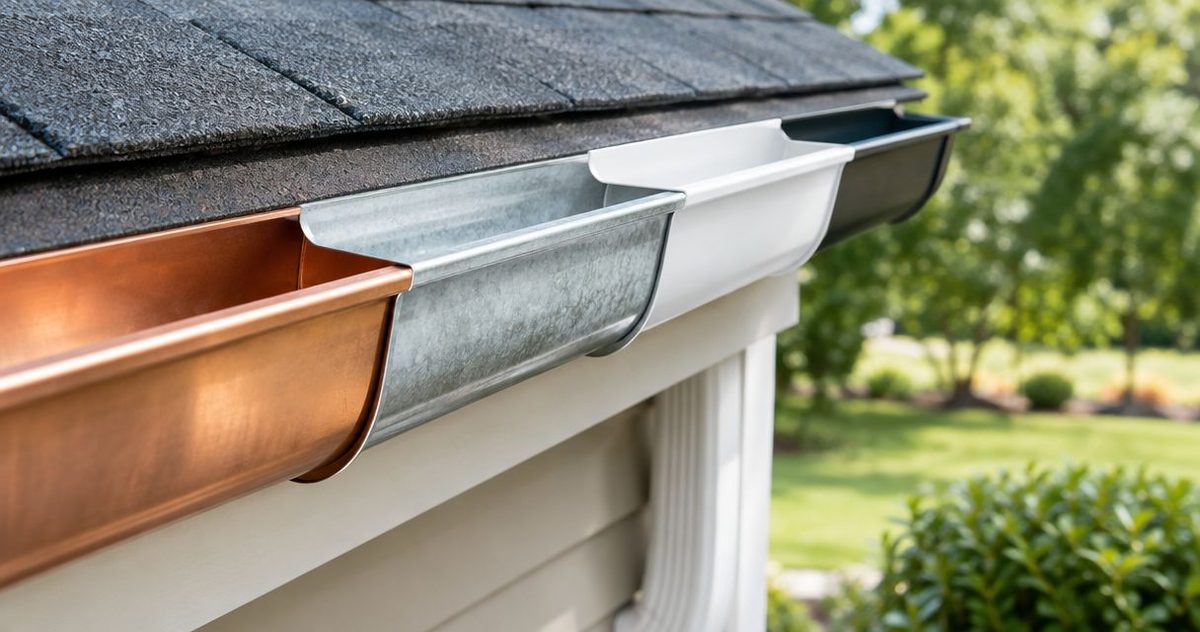
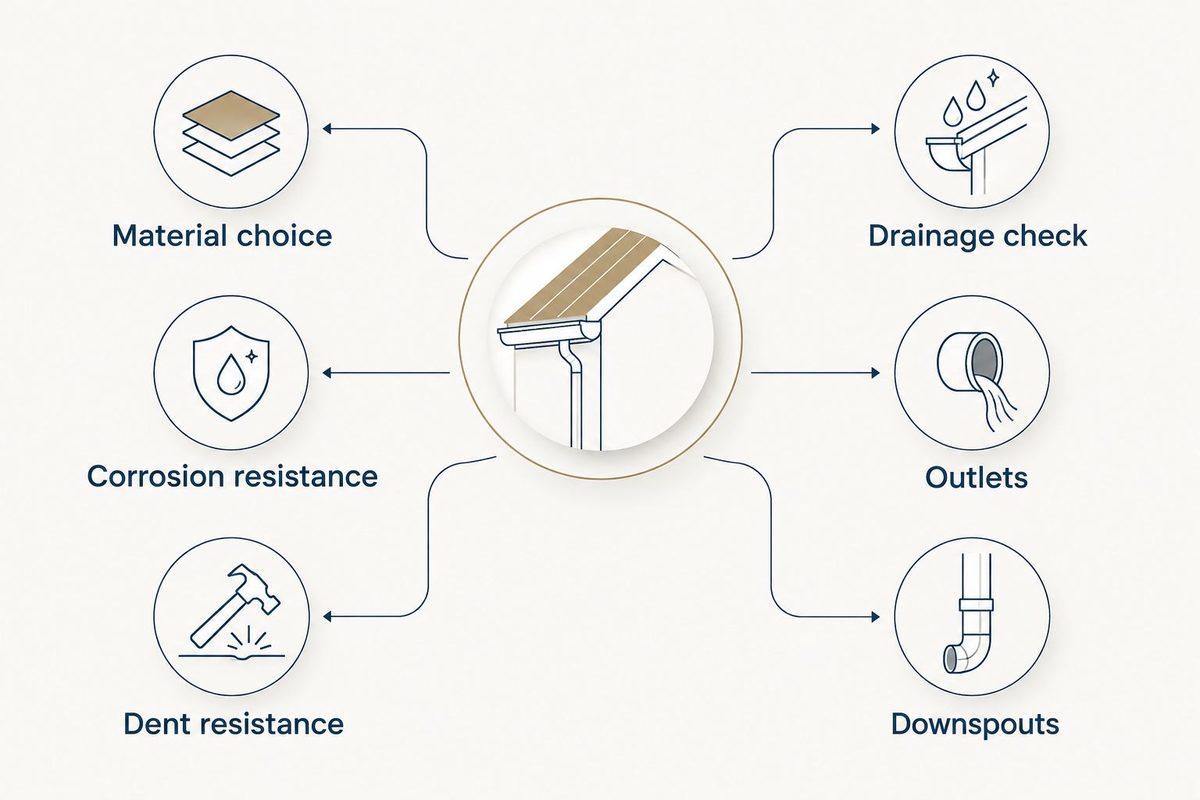
Copper lasts the longest as a material, but aluminum is the practical pick for most homes. This guide ranks five gutter materials by how they handle corrosion, dents, upkeep, and installation, not by made-up lifespan numbers. Material is only part of the answer, though. Pitch, hangers, seams, outlets, and downspouts decide whether water actually leaves your roof edge the way it should.
Short version
- Most durable material: copper.
- Specialty-metal alternative: zinc, with an installer who knows it.
- Best for most homes: aluminum. It doesn’t rust and keeps the project focused on good drainage.
- When dents are the worry: galvanized steel, if you’ll keep up with its coating.
- Weakest long-term: vinyl.
Why this matters
A gutter can look fine from the yard and still send water behind the fascia or over the front edge. If you’re planning a roof replacement or dealing with storm damage, have the gutters and roof edge looked at together. Campbells Precision Roofing installs seamless gutters in 5″, 6″, 7″, and half-round profiles across Denver, NC and the Lake Norman and Charlotte area. Confirm the material and scope for your project in the written estimate.
Don’t pick a material before checking drainage capacity. Roof area, slope, outlet placement, and where water can drain decide the size and layout that belong on your house. A 5-inch or 6-inch label alone doesn’t.
What makes the best gutter material?
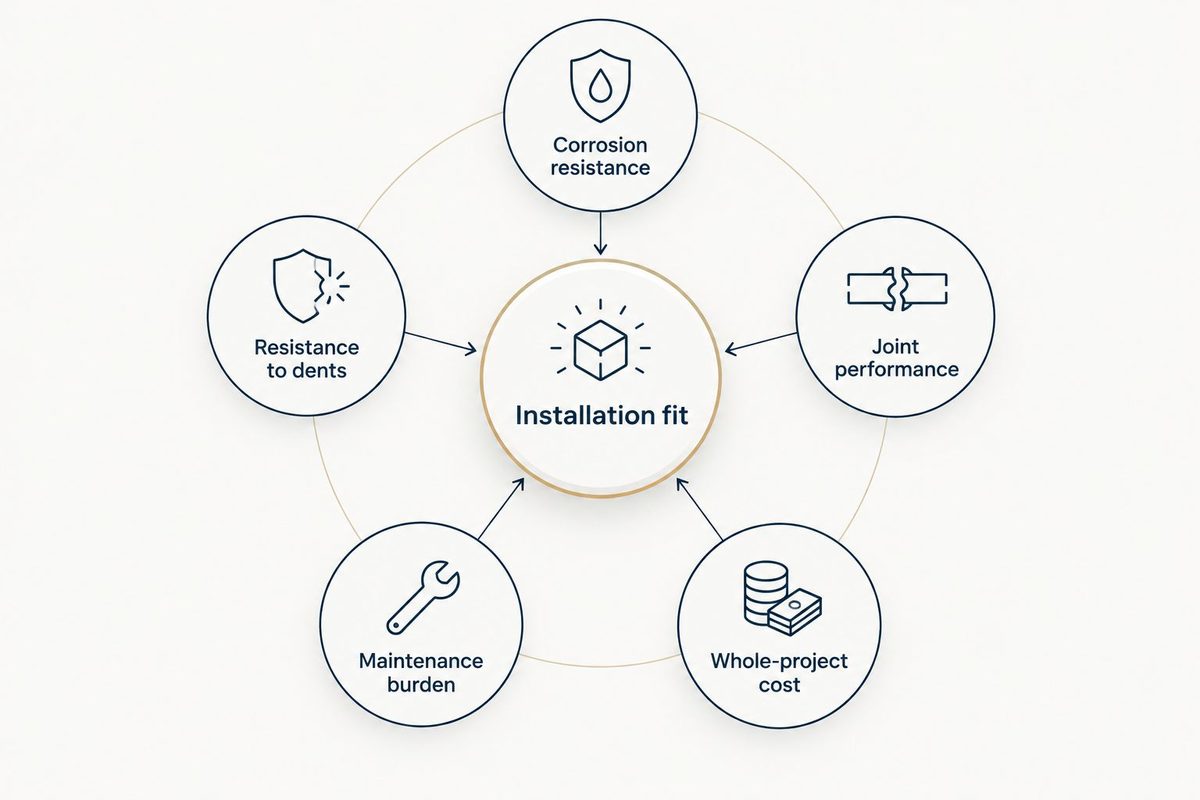
- Corrosion resistance: gutters stay wet and hold debris. Look at what happens where water sits, coatings wear, or different metals touch.
- Resistance to dents and movement: branches, ladders, temperature swings, and loose hangers stress materials differently.
- Joints and seams: corners, outlets, and connections need sound installation whatever the material.
- Upkeep: every gutter needs debris removed. Some materials also depend on an intact protective coating.
- Installation fit: not every crew works with every material. Ask how the system attaches to your fascia and connects to downspouts.
- Whole-project cost: compare written scopes, not material labels. Include removal, hangers, outlets, downspouts, and any fascia work.
Gutter materials at a glance
| Rank and material | Best for | Standout feature | Key limitation |
|---|---|---|---|
| 1. Copper | Maximum material durability | Resists rust without a protective coating | Specialty install; connections need careful planning |
| 2. Zinc | A specialty-metal alternative | Forms a protective patina | Needs an installer experienced with zinc |
| 3. Aluminum | Most residential replacements | Doesn’t rust; practical scope | Dents more easily than steel |
| 4. Galvanized steel | Spots where dents are the concern | Rigid metal | Can rust where the coating fails |
| 5. Vinyl | Limited-scope, lowest-outlay projects | Doesn’t rust | Temperature movement and sun weathering |
The table separates corrosion resistance from dent resistance. Steel can be the right answer to a specific impact problem without being the best all-around material, and copper’s top rank doesn’t make it the fix when the real problem is an undersized outlet or rotten fascia.
1. Copper: best gutter material for maximum durability
Copper resists rust and develops a patina as it ages. It leads this ranking for homeowners who put material longevity first. The tradeoff is that the installer has to plan the whole assembly, including fasteners, joints, and contact with other metals.
Pros: no coating to wear off, and the patina is part of the look. Cons: contact with dissimilar metals can cause corrosion, the color changes over time, and it doesn’t fix bad pitch or weak fascia. Verdict: Buy when the written scope names compatible components and a drainage plan.
2. Zinc: best specialty-metal alternative
Zinc forms a protective patina, which is why it ranks near the top for durability. Install details and the crew’s experience with zinc matter a lot, so don’t assume a crew that installs aluminum every day uses the same methods for zinc.
Verdict: Hold until the installer names the components and explains how joints and hangers will be handled.
3. Aluminum: best gutter material for most homeowners
Aluminum doesn’t rust and is the practical starting point for a residential gutter replacement. It ranks below copper and zinc on a durability-first list only because it can dent. For most homeowners in 2026, aluminum is the material to look at first.
Pros:
- Doesn’t rust, even where the painted finish gets scratched
- Keeps the estimate focused on the essentials: pitch, outlets, hangers, and downspouts
Cons:
- Can dent from impacts or ladders
- The finish can scratch or wear
Verdict: Buy, once the installer has checked capacity and attachment instead of just copying the old gutter. If the old gutter overflows, copying its size repeats the problem.
4. Galvanized steel: best when dents are the concern
Galvanized steel uses a zinc coating to limit rust. Its stiffness makes it worth a look where dent resistance matters more than low-maintenance corrosion resistance, but cut edges, scratches, and aging coatings need attention.
Verdict: Hold until the estimate explains how edges and connections will be protected. If corrosion is why you’re replacing, ask why steel beats aluminum for your house.
5. Vinyl: weakest long-term pick
Vinyl doesn’t rust, but it expands and contracts with temperature and weathers in the sun, so it ranks last for durability.
Verdict: Skip it if long-term durability is the goal. If you still consider it, ask how the joints handle movement and how the gutter is supported.
Get a free gutter inspection
We’ll check your gutters, downspouts, and roof edge and give you a clear written scope.
How we ranked gutter materials
The order weighs corrosion resistance first, then dents, upkeep, and installation complexity. This ranking doesn’t assign a lifespan or a local price to any material, because neither can be set without looking at your house. Compare written scopes that name the material, gutter and downspout sizes, attachment method, disposal, and any fascia or roof-edge repairs.
If you have a leak as well as failing gutters, diagnose them separately. Our guide on fixing a roof leak without replacing the whole roof covers the roof side.
Which gutter material should you choose?
Choose aluminum as the default in 2026. Choose copper when material durability is your top priority and the installer can specify compatible parts. Consider zinc only with a zinc-specific install plan, and galvanized steel when dents are the problem you need to solve. Don’t choose vinyl for a durability-first replacement.
If storm damage started the project, ask for photos of the gutters, fascia, and roof edge before agreeing to a scope. Campbells Precision Roofing does storm and hail inspections with photo documentation. Questions about your policy go to your insurance company.
FAQ
What is the most durable gutter material?
Copper ranks first here because it resists rust without a protective coating. The installed gutter still needs sound joints, hangers, and drainage.
What is the best gutter material for most homes?
Aluminum. It doesn’t rust, but it can dent, and it still has to be sized and installed correctly.
Is copper better than aluminum for gutters?
Copper wins on long-term material durability. Aluminum is the practical default when you want rust resistance without a specialty-metal project.
Is zinc a good material for gutters?
Zinc resists corrosion and forms a protective patina. Make sure the installer has a zinc-specific plan for joints, hangers, and connections.
Do galvanized steel gutters rust?
They can, where the protective coating is damaged or wears away. Check cut edges, joints, and scratches over time.
Are vinyl gutters durable enough for a long-term replacement?
Vinyl is the weakest long-term pick here. It doesn’t rust, but temperature movement and weathering put stress on joints and supports.
Should I choose 5-inch or 6-inch gutters?
Decide after someone reviews your roof area, outlets, and downspouts. We install 5″, 6″, and 7″ seamless gutters and size them to the roof.
One last thing
The most durable material isn’t the right fix for the wrong problem. Before you sign off on a gutter replacement, ask the installer to show you where water enters, where it escapes, and where each downspout drains. Under heavy trees? See our gutter guard guide for heavy tree cover.
Campbells Precision Roofing · Denver, NC 28037 · (704) 280-5996 · NC Licensed Contractor #101889