
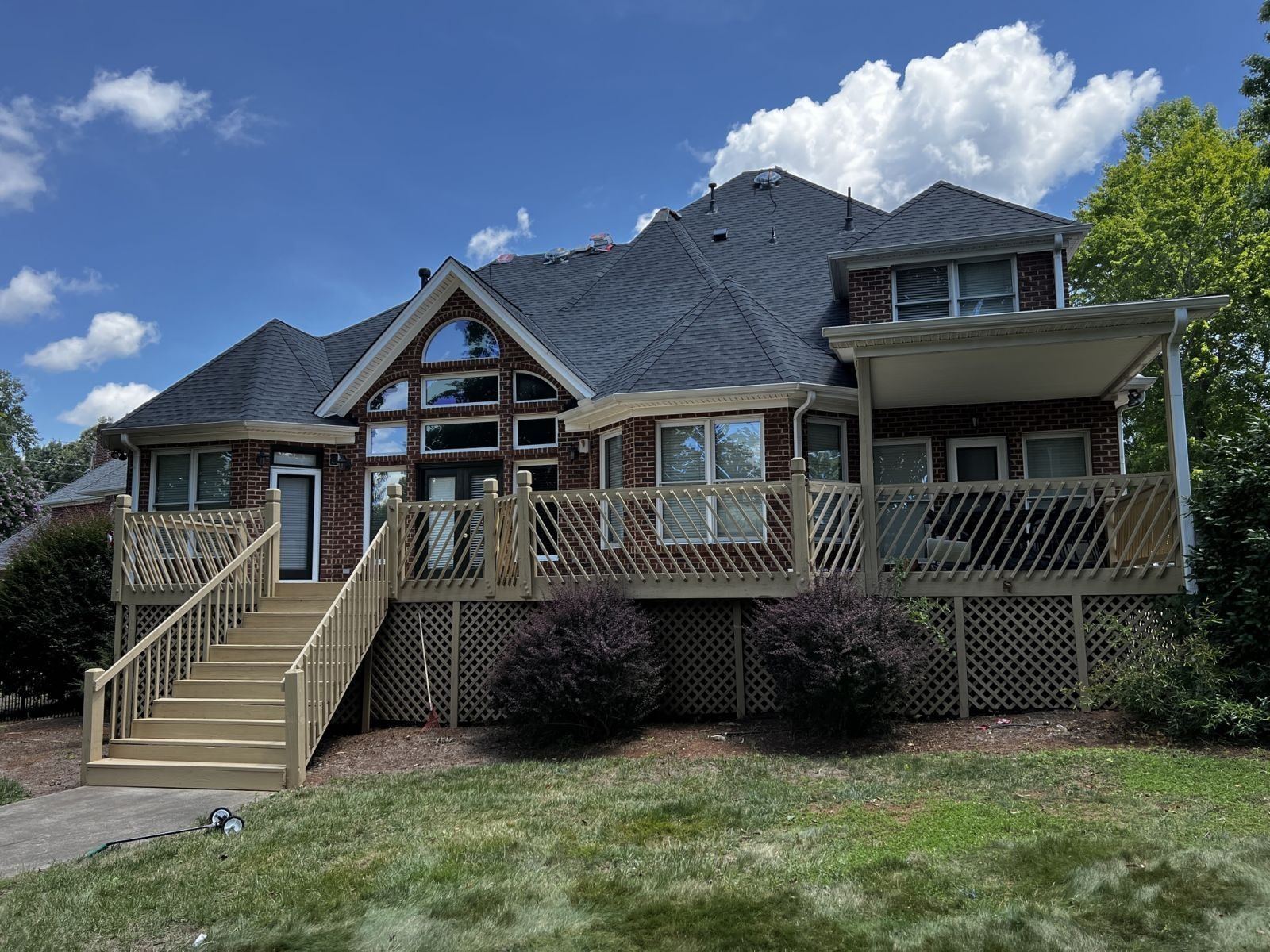
Around Denver and the west side of Lake Norman, a lot of homes sit under tall oaks, maples, and pines. By late fall the gutters are packed with leaves and needles, and the first hard rain shows you exactly where they can’t keep up: water spilling over the front edge, a downspout gushing at one corner, or a run pulling away from the fascia board.
The question we hear most is simple: can I just fix my gutters, or do I need new ones? We’re Campbells Precision Roofing, a roofing and gutter contractor based in Denver, NC, and serving the Lake Norman area since 2015. Here’s how we help homeowners make that call.
First, figure out why the water isn’t going where it should
Gutters have one job: catch the water coming off your roof and carry it to the downspouts and away from the house. When that isn’t happening, it’s usually one of these:
- Clogs. Leaves, pine needles, seed pods, and shingle granules collect at the outlets and inside the downspouts. A gutter can look clear from the ground and still be blocked where it matters.
- Pitch. Gutters need a slight slope toward each downspout. Loose or bent hangers create low spots where water sits and spills over.
- Seams and end caps. Joints are where most gutter leaks start, especially on older sectional gutters with a seam every few feet.
- Capacity. Some roofs shed more water than the gutter or the downspouts can carry, especially below a valley where two roof planes dump water into the same corner.
- The roof edge itself. Sometimes the water at the eave isn’t a gutter problem at all. Worn shingles, missing drip edge, or a flashing problem can send water behind the gutter.
While you’re looking, check the splash area under your downspouts. Heavy piles of shingle granules there can mean the roof is wearing out. Our post on when to replace your roof in Denver, NC covers the other signs.
When a gutter repair is enough
Plenty of gutter problems don’t call for a new system. A repair usually makes sense when the trouble is in one or two spots and the rest of the gutter is straight and solid, for example:
- A few loose or broken hangers letting one section sag
- A leaking seam, corner, or end cap
- A downspout that’s crushed, clogged, or knocked loose
- One run that a falling limb bent or pulled down
- Gutters that just need a thorough cleaning and the pitch reset
We handle gutter repair and cleaning, and we’ll tell you plainly if a repair will hold up or if you’d just be patching a system that’s near the end of its life.
When new seamless gutters are the better call
Replacement starts to make more sense when the problems show up all along the house instead of in one place:
- Leaks at many joints, or the same seams leaking again after they’ve been resealed.
- Sagging in several places even after the hangers are tightened or replaced.
- Rotted fascia behind the gutter. If the board the gutters hang on has gone soft, it has to be repaired before any gutter goes back up. Overflowing gutters are one of the most common reasons fascia rots in the first place.
- Overflow in a normal heavy rain even when the gutters are clean. That usually means the gutters or downspouts are too small for the roof.
- Storm or limb damage across several runs.
- A new roof on the way. If you’re replacing the roof anyway, it’s the best time to look at the gutters, too.
We install seamless gutters, which are formed in long continuous runs instead of short pieces joined together. Fewer seams means fewer places for leaks to start, and a cleaner line along the roof edge. If you’re weighing materials, our guide to gutter materials ranked by durability compares the common options.
Getting the size and downspouts right
Bigger isn’t automatically better, but the right size matters. We install 5″, 6″, and 7″ seamless gutters, plus 6″ half-round for a classic look:
- 5″ is a common residential size and works for many homes when it’s paired with enough downspouts and proper pitch.
- 6″ adds capacity for larger roof areas or heavier runoff, and it’s a frequent upgrade where 5″ runs short.
- 7″ is a higher-volume option when the roof footprint and storm runoff call for it.
- 6″ half-round suits homes where the look of the gutter matters as much as the capacity.
Downspout placement matters just as much as gutter size. Many homes around Lake Norman have steep, complex rooflines with several valleys, which concentrate water at a few corners. Having enough downspouts in the right spots can solve an overflow problem that a bigger gutter alone wouldn’t. We can add or move a downspout when that’s the better fix.
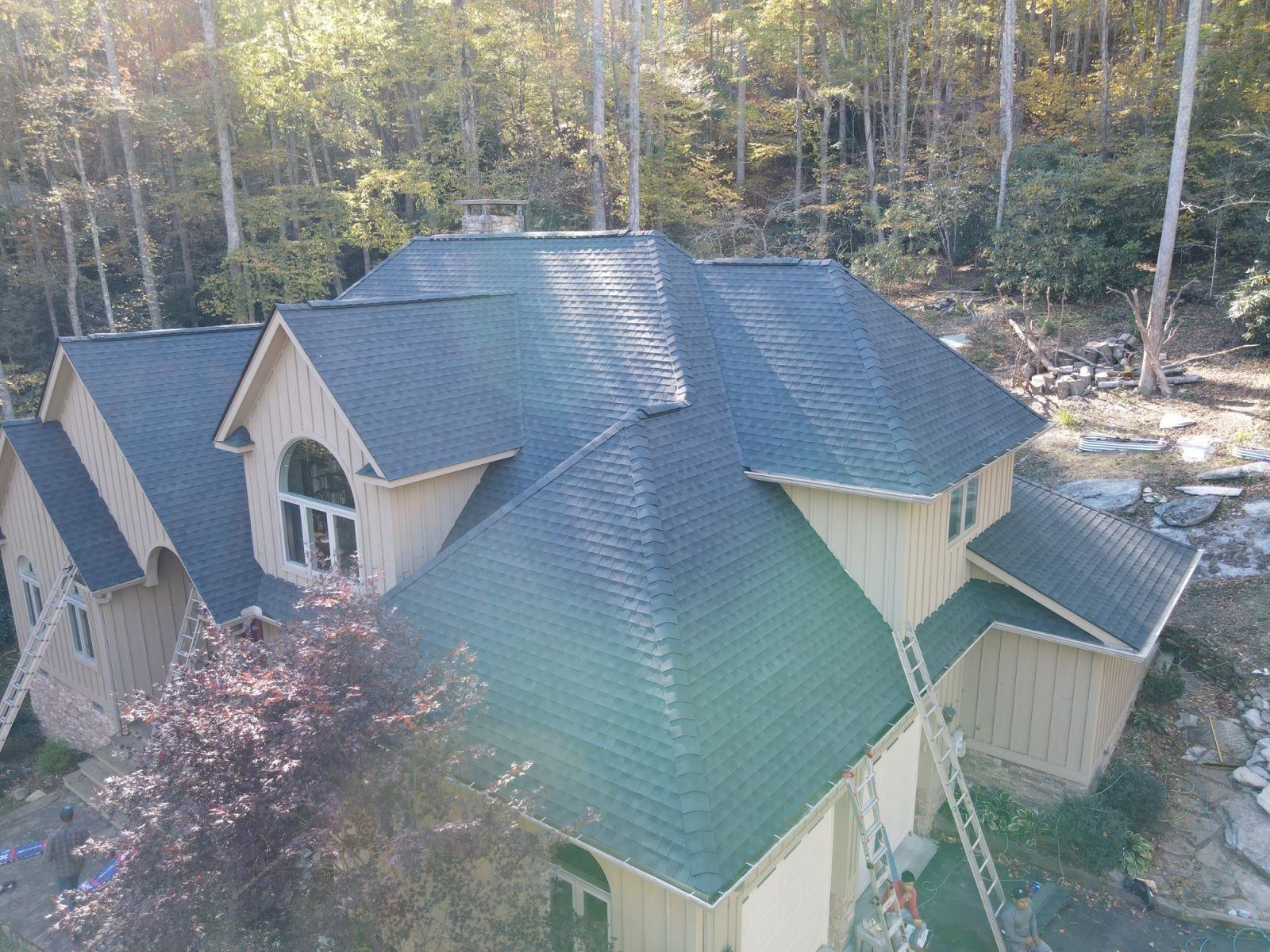
Do you need gutter guards in Denver, Sherrills Ford, or Stanley?
On wooded lots and lake lots on the west side of Lake Norman, gutter guards are worth a conversation. Oak leaves and pine needles clog gutters fast, and a clogged gutter is the one that overflows onto the fascia and toward your foundation.
A few honest points before you decide:
- Guards cut down on cleaning, but no gutter is completely maintenance-free. Debris still lands on top and needs clearing now and then.
- The gutter has to drain correctly first. A guard won’t fix bad pitch, leaking seams, or a blocked downspout.
- RainDrop gutter guards are an option, not part of every gutter job. We install them on new or existing seamless gutters when they fit the home, and we can remove and replace older guards that aren’t working.
If you want to compare guard designs side by side, read our guide to the best gutter guards for homes with heavy tree cover.
Gutters overflowing or pulling loose?
Call or text (704) 280-5996 for a free gutter inspection in Denver and around Lake Norman.
Gutters and your roof work as one system
Because we’re roofers first, we look at the roof edge and the gutters together. Water at the eave can come from an overflowing gutter, a roof detail, or both, and fixing only one side can leave the problem in place.
When a roof does need replacing, it’s a full tear-off down to the deck. We never install new shingles over an old roof. That’s also the cleanest time to replace tired gutters, because the roof edge, drip edge, and fascia are all easy to see and fix at once. See roof repair and replacement for how that process works.
We install GAF architectural shingles and standing seam metal roofs, along with Brava composite roofing and VELUX skylights, and we’re a GAF Master Elite® contractor.
What happens at a free gutter inspection
When we come out, we:
- Walk the gutters and downspouts and check pitch, seams, hangers, and outlets
- Look at the fascia and the roof edge behind the gutters
- Note where the roof is sending the most water, like valleys and long runs
- Photograph what we find so you can see it for yourself
Then you get a plain answer: repair what you have, replace it with new seamless gutters, and whether gutter guards make sense for your trees. Learn more on our gutters and RainDrop guards page.
Gutter work in Denver and around Lake Norman
We’re based in Denver, so gutter and roofing work in Denver, NC is close to home. We also work in Sherrills Ford, Stanley, Lincolnton, Mooresville, Cornelius, Huntersville, and across the Lake Norman area. See all areas we serve.
Call or text (704) 280-5996, or contact us to set up a free gutter inspection.
Campbells Precision Roofing · Denver, NC · (704) 280-5996 · NC Residential Contractor License L.101889